 Image 1 of 1
Window of Tolerance Wheel – Nervous System Awareness & Regulation Tool
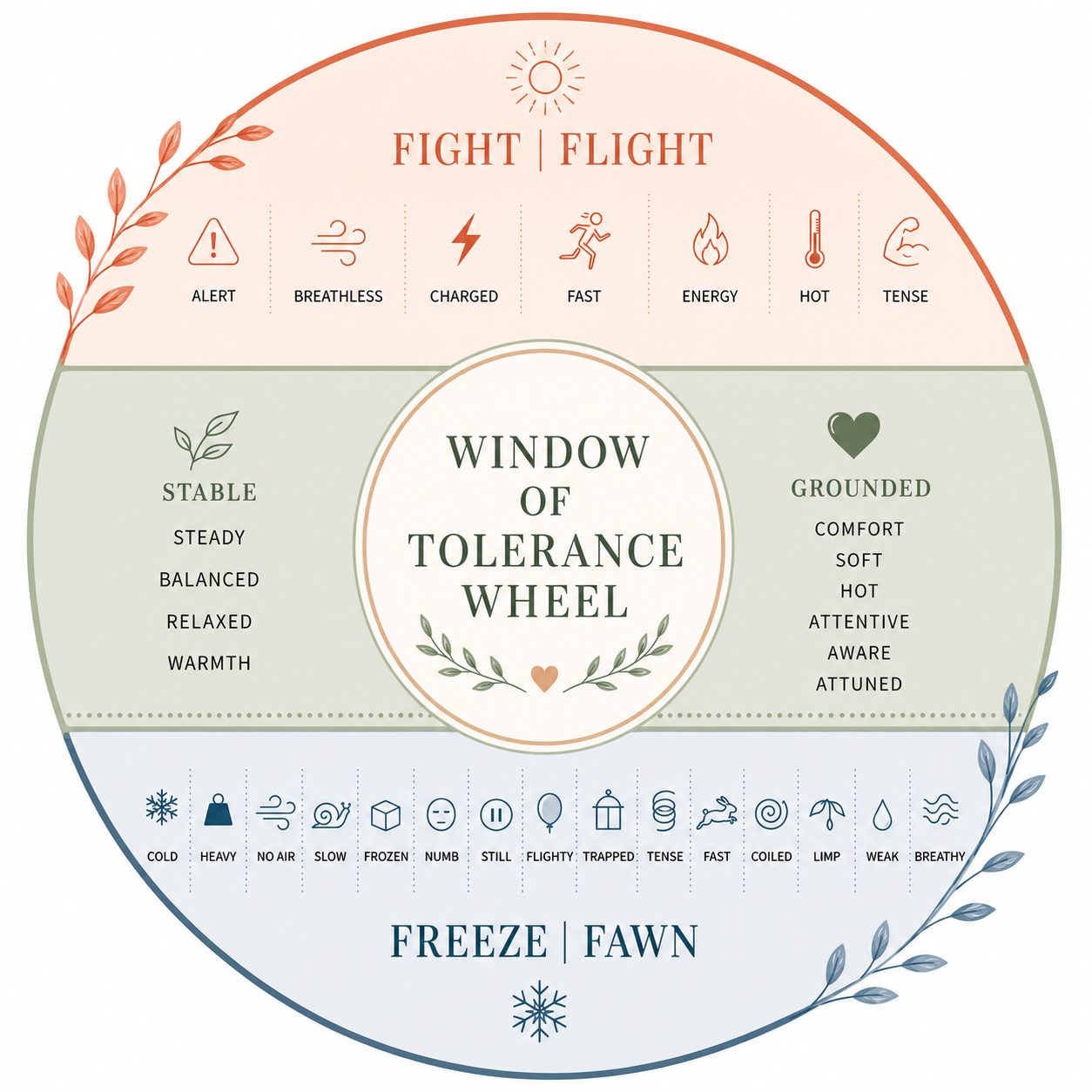
Gain a deeper understanding of your nervous system and emotional responses with this beautifully designed Window of Tolerance Wheel. Created as an easy-to-understand visual resource, this tool helps identify what it feels like to be within your “window of tolerance” versus states of nervous system overwhelm or shutdown.
The Window of Tolerance is a concept often used in therapy, trauma healing, emotional regulation, and recovery work to help individuals recognize patterns in how they respond to stress, overwhelm, triggers, and dysregulation.
This wheel provides a visual guide to common emotional, mental, and physical experiences associated with different nervous system states, helping you better recognize when you may be feeling grounded, activated, overwhelmed, shut down, or disconnected.
Why this resource is beneficial:
Builds self-awareness
Learn to recognize signs that your nervous system may be moving into fight, flight, freeze, or fawn responses before overwhelm escalates.
Supports emotional regulation
By identifying where you are in your window of tolerance, you can begin responding with greater compassion, awareness, and intentional coping strategies rather than reacting automatically.
Helpful for trauma, anxiety, chronic illness, and eating disorder recovery
Many individuals navigating trauma, chronic stress, chronic illness, anxiety, or eating disorder recovery experience nervous system dysregulation. This wheel can help increase awareness of body-based cues, emotional shifts, and stress responses in a gentle, accessible way.
Encourages grounding and nervous system connection
Understanding what “regulated” feels like can make it easier to notice when you need support, rest, nourishment, movement, boundaries, or grounding practices.
Designed with warmth and clarity in mind, this Window of Tolerance Wheel serves as a practical psychoeducation and self-reflection tool for therapy, recovery work, journaling, group settings, or everyday self-awareness.
Window of Tolerance Wheel – Nervous System Awareness & Regulation Tool
Gain a deeper understanding of your nervous system and emotional responses with this beautifully designed Window of Tolerance Wheel. Created as an easy-to-understand visual resource, this tool helps identify what it feels like to be within your “window of tolerance” versus states of nervous system overwhelm or shutdown.
The Window of Tolerance is a concept often used in therapy, trauma healing, emotional regulation, and recovery work to help individuals recognize patterns in how they respond to stress, overwhelm, triggers, and dysregulation.
This wheel provides a visual guide to common emotional, mental, and physical experiences associated with different nervous system states, helping you better recognize when you may be feeling grounded, activated, overwhelmed, shut down, or disconnected.
Why this resource is beneficial:
Builds self-awareness
Learn to recognize signs that your nervous system may be moving into fight, flight, freeze, or fawn responses before overwhelm escalates.
Supports emotional regulation
By identifying where you are in your window of tolerance, you can begin responding with greater compassion, awareness, and intentional coping strategies rather than reacting automatically.
Helpful for trauma, anxiety, chronic illness, and eating disorder recovery
Many individuals navigating trauma, chronic stress, chronic illness, anxiety, or eating disorder recovery experience nervous system dysregulation. This wheel can help increase awareness of body-based cues, emotional shifts, and stress responses in a gentle, accessible way.
Encourages grounding and nervous system connection
Understanding what “regulated” feels like can make it easier to notice when you need support, rest, nourishment, movement, boundaries, or grounding practices.
Designed with warmth and clarity in mind, this Window of Tolerance Wheel serves as a practical psychoeducation and self-reflection tool for therapy, recovery work, journaling, group settings, or everyday self-awareness.